
Guest post written by Helena Webb
There are seasons of life that look very different from how we imagined things would pan out.
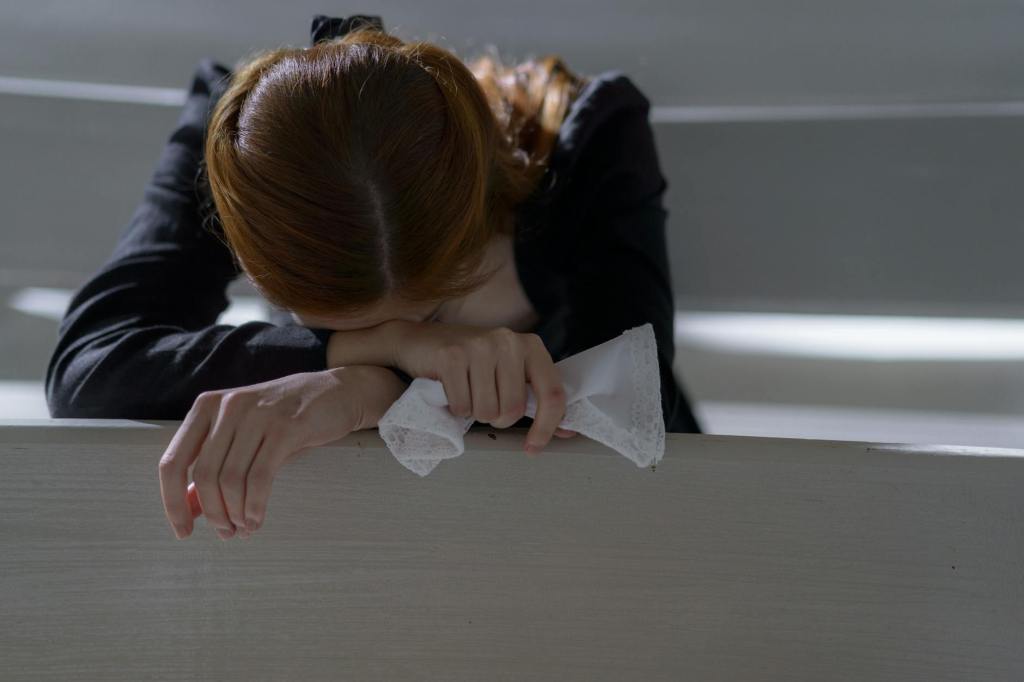
We want to share a little of our story — not for sympathy, and certainly not to criticise anyone — but because so much of life with neurodivergent children happens invisibly. What people see on a Sunday is often only a tiny glimpse of what has already happened long before we arrive, and what we have had to navigate through the preceding week. For our family, life rarely looks calm or picture-perfect and this is especially the case on a Sunday. For us in this present season, Sunday looks like one parent attending church while the other stays home with overwhelmed children. Moment by moment, we must hold on to Jesus in the middle of exhaustion, dysregulation, sensory overload, and survival mode.
Tom and I have two beautiful, expressive, comical, deeply feeling neurodivergent daughters aged 7 and 8 years old. Between them we navigate autism, ADHD and PDA (Pathological Demand Avoidance, sometimes referred to as Persistent Drive for Autonomy). These are not behavioural ‘trendy’ labels. They describe the intrinsic wiring of our daughters’ brains and nervous systems and therefore shape how they experience the world around them — emotionally, socially, physically, and spiritually.
Like many parents, our understanding of neurodivergence deepened through our children. Along the way, Tom and I received our own neurodivergent diagnoses as adults. In many ways, that brought relief and understanding to struggles we had carried quietly for years; however, it also added another layer to family life. Parenting neurodivergent children whilst navigating one’s own neurodivergence can be both deeply connecting and immensely exhausting.
We have learned that neurodivergence is still hugely misunderstood – especially in females. Many people still picture autism or ADHD through outdated stereotypes: a disruptive little boy who cannot sit still, or the child whose struggles are immediately obvious. But neurodivergence in girls often presents very differently. Many girls learn to mask from an early age – hiding distress, copying others socially, internalising anxiety, and working incredibly hard to appear as though they are coping. Due to this, people sometimes say things like, “but she doesn’t look autistic”, or, “she seems fine to me”. Yet, outward appearances can hide enormous internal struggles and suffering.
A child may look calm whilst internally battling sensory overwhelm, anxiety, exhaustion, panic or emotional shutdown. A girl with ADHD may not appear hyperactive outwardly, but her mind may be racing constantly. She may be battling intense emotions, rejection sensitivity, chronic overwhelm, difficulty regulating attention as well as the exhaustion that comes from trying to keep up with expectations that feel impossible to sustain. Sometimes the children who appear to cope best publicly are the ones who fall apart completely once they are home, and finally feel safe enough to release everything they have been holding in all day. This has certainly been our experience over the last few years, especially when our girls were still in school.
PDA is especially misunderstood. For autistic PDA-ers especially, everyday demands can trigger overwhelming anxiety and a deep sense of threat. Things that may appear simple from the outside — what can be seen as basic day-to-day tasks such as washing, toileting, eating, drinking, getting dressed, leaving the house, entering unfamiliar environments, transitioning between activities, coping with noise, or responding to expectations — can feel enormous to a nervous system already overwhelmed. When anxiety rises, what emerges can sometimes look like defiance, avoidance, aggression, controlling behaviour, withdrawal, or refusal. From the outside, it can easily be mistaken for “bad behaviour”, but underneath it is often panic, overwhelm, and a child trying desperately to feel safe.

Like many families of neurodivergent children, our journey within the education system was painful. After watching our children struggle in environments that could not fully meet their needs, and subsequently trying to fight for those needs to be met, it was clear we had no option but to withdraw them from the education system, and home educate. It was not something we chose lightly, and it is certainly not an easy path. However, we reached a point where protecting our children’s mental health and wellbeing had to come first.
Home education has brought healing in many ways. It has given our children space to recover, to feel safe, and to rediscover joy in learning. It does however mean there is very little respite for us as a couple. There are no quiet hours during the day, no real recovery periods, and very little opportunity to step out of survival mode. Parenting, supporting emotional regulation, facilitating learning, navigating burnout, and meeting complex needs all happen continuously.
Parenting neurodivergent children requires extraordinary emotional energy, flexibility, patience, constantly needing to tune in to the nervous system needs of the child, and responding by co-regulating – aka ‘loaning’ your own nervous system to your child to help re-regulate theirs. Much of our lives are spent trying to reduce overwhelm, manage sensory needs, co-regulate intense emotions, anticipate triggers, and help our children feel safe in a world that can often feel far too loud and demanding for them.

Attending church — beautiful and life-giving though it is — can also be incredibly demanding for neurodivergent people. The noise, transitions, crowds, social interaction, sensory input, unpredictability, and expectation to sit still or participate in particular ways can become overwhelming very quickly.
There can be a particular loneliness in parenting neurodivergent children within church spaces. Many of us grew up with an image of what faithful Christian parenting should look like: children sitting quietly in pews, happily attending Sunday School, joining in with activities and participating in church life with relative ease. There can be an unspoken expectation that if we teach our children well enough, parent consistently enough, pray enough and persevere enough then church life will naturally fall into place. But for families like ours, it often does not and that can bring a deep sense of grief, guilt, and failure. When your family does not look like the families around you, when your children cannot engage in the expected ways, and when your faithfulness looks messy instead of tidy, it can quietly erode your confidence and belonging. Invisible disabilities can make this especially painful. If a child is in a wheelchair for example, people immediately understand that accommodations may be needed. There is visible recognition that life is harder. But with neurodivergence, the struggles are often hidden beneath the surface.

Somehow, this difficult path has also become ‘holy ground’. Not because the exhaustion is easy, or because the struggles disappear, but because we have encountered the grace of God here in ways we may never otherwise have recognised. There have been many moments where we have felt inadequate, overwhelmed, and painfully aware of our limitations. We have questioned ourselves as parents, wondered whether we are failing our children, and grieved how different our family life looks from the picture we once imagined. But again, we find ourselves met not by condemnation, but by the compassion of Christ.
The LORD remains faithful, as always. The LORD has provided for our family in incredible ways, for which we are deeply grateful. The more fragile and dependent we have become, the more we have discovered the gentleness of Jesus towards weary people. His grace is not reserved for families who appear to have everything together. He meets us in the chaos, in the tears, in the exhaustion. We are learning that faithfulness is not about a perfect performance for God or for others. It is about returning to Him honestly, again and again, exactly as we are. His grace truly is sufficient for each day. Despite the challenges, we know our children are an incredible gift entrusted to us. Their minds, personalities, sensitivities, creativity, honesty, intensity, humour, and unique ways of experiencing the world reflect something precious of the image of God. They are not mistakes to be fixed into sameness. They are deeply loved by Christ.
Through our children, God is teaching us things we may not otherwise have learned — dependence, perseverance, humility, compassion, surrender, and grace. They are drawing us towards a deeper understanding of what it means to love sacrificially, to live honestly before God, and to recognise our need for Him each day.
Perhaps some of the most sacred moments of faith are found not in polished appearances or perfect Sundays, but in the quiet laying down of ourselves for the sake of those God has entrusted to us.


You must be logged in to post a comment.